



You sleep well, yet the mirror insists otherwise: lids that feel weighty, eyes that photograph half-closed, brows constantly hitched upward just to see properly. Hooded skin swallows eyeliner by lunchtime, one side may droop more than the other, and in more advanced cases the surplus upper-lid skin — known as dermatochalasis — can begin to crowd the edges of your vision.
If that sounds familiar, there is a well-established answer. Eyelid surgery lifts droopy eyes for a great many patients by removing the redundant skin and restoring a clean, open lid line. Depending on your anatomy, that may mean upper blepharoplasty on its own or paired with ptosis repair where the levator muscle is part of the problem. The sections below set out what happens before and after surgery, which results are realistic and how recovery typically unfolds — everything you need to decide with confidence.
Why Eyelids Begin to Droop
Drooping lids change more than your reflection. Some people describe a genuine heaviness; others simply tire of looking exhausted in every photograph, or of makeup that folds and smears where the skin overlaps. Before anything else, the question to answer is what is causing it — because the cause, not the appearance, dictates the right treatment.
Frequent Culprits
Age and inheritance do most of the work. As elasticity fades, spare skin accumulates on the upper lid — dermatochalasis — and drapes over the natural crease, shrinking the visible eye and blurring its definition. Sun exposure, allergies, habitual eye-rubbing and fluid retention can all add swelling and puffiness on top, and it is common for one lid to sit lower than its partner, producing a visible asymmetry. In Dubai’s intense sunlight, diligent UV protection is worth taking seriously.
Ptosis or Excess Skin?
Getting this distinction right is what separates a good result from a disappointing one. With dermatochalasis, the lid only appears droopy because surplus skin hangs over it. True ptosis is a different mechanism: the lid itself sits low because the lifting apparatus — typically the levator muscle — is underperforming. Either can exist alone, and plenty of patients have both at once, which is why treatment should always start from a proper clinical evaluation rather than a glance in the mirror.
Effects on Vision
What begins as a cosmetic nuisance can shade into a functional one. Skin that hangs low enough may clip the outer edges of your visual field — most noticeable when reading, driving or glancing upward — and many people unconsciously brace their brows all day to compensate, trading eyestrain for forehead fatigue. If any of this rings true, a clinical assessment can measure exactly how much the lid is intruding on your sight.
How Surgery Lifts a Drooping Eyelid
The operation’s purpose is straightforward: relieve the heaviness and give the lid back its clean contour. For most patients that means excising the surplus skin so the eye opens up and reads as rested. The hallmark of good work is what you do not see — no startled stare, no altered identity, simply your own eyes looking brighter and more awake.
Inside the Blepharoplasty Procedure
Blepharoplasty tackles whatever is physically weighing the eye area down — removing redundant skin, refining the contour of the lid and adjusting tissue where a heavy look demands it. When true ptosis is part of the picture, your surgeon may combine the procedure with ptosis repair to raise the lid’s resting position. Because droopy eyes can stem from several causes at once, the operative plan is always individual.
Treating the Upper Lids
Upper blepharoplasty addresses the zone where hooding forms. The incision follows the natural crease of the lid, so once matured, the fine line hides within a fold you already have. The procedure lightens the heavy upper lid, evens out asymmetry between the two sides and opens the eye — and where surplus skin has been encroaching on peripheral vision, it can help there too.
Treating the Lower Lids
Lower blepharoplasty is aimed at the bags and puffiness beneath the eye. Depending on your anatomy, tissue may be reduced, repositioned or both, smoothing the under-eye surface into a balanced line. Conservatism matters here: the goal is a soft, natural transition from lid to cheek, never a hollowed-out look.

Your Surgical Journey, Stage by Stage
Uncertainty breeds nerves, so it helps to know the shape of the process. Though every plan is tailored, the path runs through three stages: careful assessment, the procedure itself, and supervised healing.
Assessment and Surgical Planning
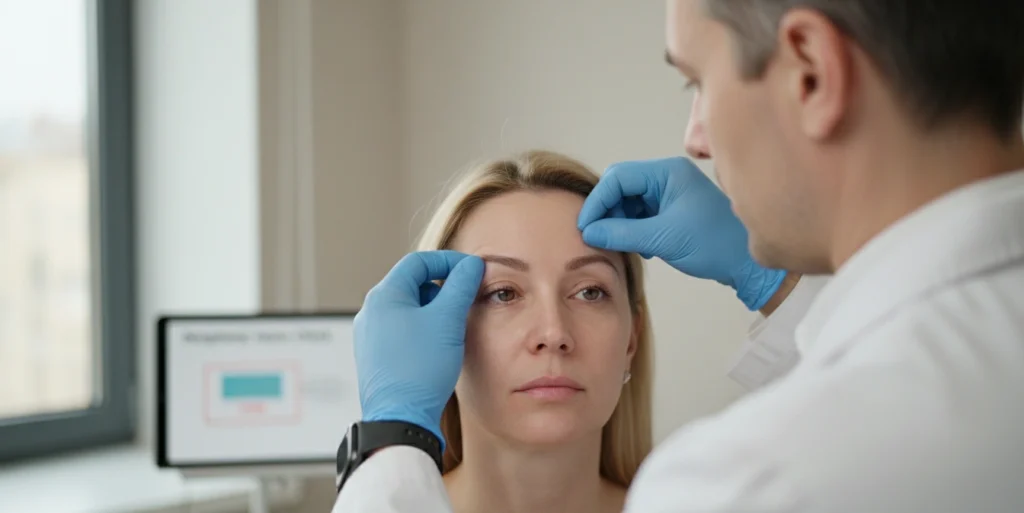
The first appointment is diagnostic detective work. Dr John Shamoun MD FACS determines whether your drooping stems from surplus skin, genuine ptosis, a descending brow or under-eye contour change, while also examining lid symmetry, structure and resting position. This is the conversation that turns hopes into realistic expectations — what surgery will improve, what may improve only partly, and whether a combined approach such as blepharoplasty with ptosis repair would serve you better. Visiting patients can often begin with a remote consultation before travelling to Dubai.
Anaesthesia and Duration
Most eyelid procedures are day surgery, so you return to your home or hotel the same evening. Local anaesthetic with sedation is the usual choice, though the safest option always depends on your comfort and medical history. How long the operation takes turns on its scope — upper lids, lower lids or both, with or without ptosis repair — and your surgeon will give you an honest estimate for your particular plan.
Where Incisions Are Placed
On the upper lid, the incision tucks into the natural crease so the healed line stays discreet. For the lower lid there are two routes — just beneath the lash line, or hidden entirely on the inside of the lid — chosen according to your anatomy and aims. Tissue is then reshaped to restore a clean contour, and closure is done with deliberate care to encourage smooth, natural-looking healing.
What Changes You Can Expect
The right benchmark is a brighter, better-rested version of your own face. Satisfaction follows when expectations are realistic and the surgical plan is drawn around your anatomy, not a template.
Cosmetic Improvements
Typical gains include a more open upper lid, better symmetry between the eyes, less hooding and an unmistakably fresher expression. Below the eye, puffiness eases and the contour smooths. Tellingly, the most successful results are the quiet ones — natural and balanced rather than dramatic.
Everyday Comfort Gains
Where overhanging skin had been narrowing your field of view, its removal can restore both function and ease. A welcome side effect: the all-day habit of hoisting the brows tends to fade, and with it the forehead tension it caused.
Durability of the Outcome
The improvement from blepharoplasty typically endures for years. Skin, of course, keeps ageing, and lifestyle — particularly sun exposure, a daily reality in the Emirates — influences how the lids change over time. Consistent sunscreen, sensible skincare and healthy habits all help the result last.
What Surgery Cannot Do
Honesty matters: blepharoplasty will not smooth every fine line or erase crow’s feet, and if a descended brow is the real culprit, a brow lift — not eyelid surgery — is the answer. Perfect mirror-image symmetry is never guaranteed, since no face is naturally symmetrical. And while under-eye shadows sometimes soften, dark circles rooted in pigment or thin skin may persist despite surgery.
Healing Milestones Week by Week
Recovery arrives in instalments. Knowing what each phase normally looks like lets you schedule work, social plans, exercise — and, for visiting patients, the flight home — without guesswork or worry.
Days One and Two: Early Care
Expect swelling and bruising to peak at the outset, with tightness, mild soreness, watering or brief dryness alongside. Rest, keeping the head raised and cold compresses (where advised) all help. Treat the incisions gently in this window — clean early healing sets up everything that follows.
The First Week: Settling Down
This is the most visible stretch of recovery, and also where progress accelerates. Many patients ease back into light work as comfort and bruising allow. If sutures need removing, your surgeon will schedule the timing, and by the week’s end the swelling has usually begun a clear retreat.
Week Two: Back Among People
By the second week most bruising has faded and confidence returns with it. Provided healing is on track, makeup is often permitted again — your surgeon sets the timing — and both everyday appearance and photographs improve markedly through this phase.
Weeks Three to Six: Regaining Momentum
Scars soften, residual swelling drains away and, with medical clearance, exercise gradually re-enters the routine. Follow-up visits during this window verify symmetry, track healing and let the surgeon deal with any small concern while it is still small.
Is Eyelid Surgery Right for You?
The ideal candidate has concerns that surgery can genuinely address — and the willingness to follow recovery guidance so healing stays safe and smooth.
Signs You May Benefit
Strong candidates typically recognise themselves in a few of these: hooded lids from surplus skin, a persistent heavy-lid sensation, obvious asymmetry between the eyes, or under-eye bags no amount of sleep improves. Looking drained in photographs while feeling perfectly fine is another classic prompt. And if you suspect the drooping is clipping your peripheral vision, raise it at consultation so it can be formally assessed.
Reasons to Postpone
Surgery should wait if a medical condition is poorly controlled, an infection is active, or the eye surface itself is struggling — severe dryness, for instance. Equally, postpone if life will not allow proper downtime or faithful aftercare; visiting patients should build recovery days into their travel plans. Protecting healing always beats rushing it.
Why Patients Choose Blepharoplasty
Chosen for the right reasons, eyelid surgery improves how you look and how you feel through the day — with nothing about it announcing that surgery took place.
1) Support for Your Field of View: Where the case is functional, clearing surplus upper-lid skin may widen the visual field and ease daily strain.
2) An Expression That Matches Your Mood: Heavy lids can broadcast exhaustion, stress or even irritation you do not feel. Restoring the lid contour lets the face read as relaxed and open again, while your natural eye shape stays exactly as it was.
3) A Tidier Upper-Eye Area: Blepharoplasty is not a wrinkle treatment, but lightening the lid and sharpening the crease leaves the whole region looking cleaner. Fine lines may still call for skincare or resurfacing to reach their best.
4) Softer Under-Eye Contours: Lower-lid work reduces bags and smooths the transition into the cheek — many patients simply look fresher, makeup or not, once the puffiness recedes.
Protecting Your Result Long Term
The operation is only half the story: preparation, disciplined aftercare and sensible long-term habits shape the final outcome just as surely.
Preparing for Surgery
Stop smoking well ahead of surgery — nicotine slows healing and can worsen scar quality. Go through every medication and supplement with your surgeon, as some raise the risk of bleeding or bruising. Then set the stage at home or in your hotel: recovery time booked, pillows arranged for head elevation, transport organised. Calm preparation buys smoother healing.
Aftercare Under the Dubai Sun
Follow the incision-care routine to the letter and resist rubbing your eyes while they heal. Sun protection is non-negotiable in this climate — UV exposure can darken fresh scars and degrade skin quality — so sunglasses and sunscreen become daily companions. Keep every follow-up appointment: monitoring swelling and symmetry lets small issues be corrected early.
When to Call Us
Contact the clinic without delay if you develop escalating severe pain, a sudden change in vision, heavy bleeding, fever, or swelling that grows rapidly on one side. Ordinary bruising and puffiness are part of healing — these signals are not, and they deserve immediate attention.
Alternatives Without Surgery
Mild changes sometimes respond to non-surgical measures. Their limits are firm, though: they cannot remove meaningful excess skin, nor fully correct true ptosis.
Fillers for Tear-Trough Shadows
Fillers earn their place when the tired look traces to hollowness beneath the eye — tear-trough shadowing — rather than to the lid itself. They will not correct hooding or surplus skin, but in a well-chosen candidate they soften shadows and smooth the under-eye transition. Restraint is essential: overfilled tear troughs read as puffiness, the very thing patients came to fix.
Laser Resurfacing and Tightening
Energy-based resurfacing and skin-tightening treatments can lift mild laxity and refine texture, particularly in earlier cases. Think of them as skin-quality tools rather than structural ones: when the real issue is pronounced hooding or ptosis, surgery remains the more effective and predictable route.
Book Your Consultation
Wondering what would actually help your eyes? Arrange a consultation at our Dubai Healthcare City or Jumeirah clinic and get answers specific to your anatomy. Your surgeon will pin down whether the issue is surplus skin, true ptosis involving the levator muscle, under-eye contour change or a blend of these — and you will leave with a grounded picture of your likely results and a recovery timeline that fits your life, including travel plans if you are visiting Dubai for treatment.
Final Thoughts
Drooping lids touch appearance, comfort and occasionally sight itself — yet with an accurate diagnosis separating surplus skin from true ptosis, surgery can restore an open, rested look with remarkable reliability. Because the best operation is the one tailored to your anatomy, a professional evaluation is the natural next step. For an unfiltered perspective, you can also browse first-hand accounts from eyelid surgery patients.

