

Patient Info
Age:
40-49
Ethnicity:
White
Height:
5’ 0” - 5’ 5”
Weight
100 - 149 lbs
Ready to see what's possible for you?
Schedule your personal consultation with Dr. Shamoun today and take the first step toward looking as vibrant as you feel.
Book An Appointment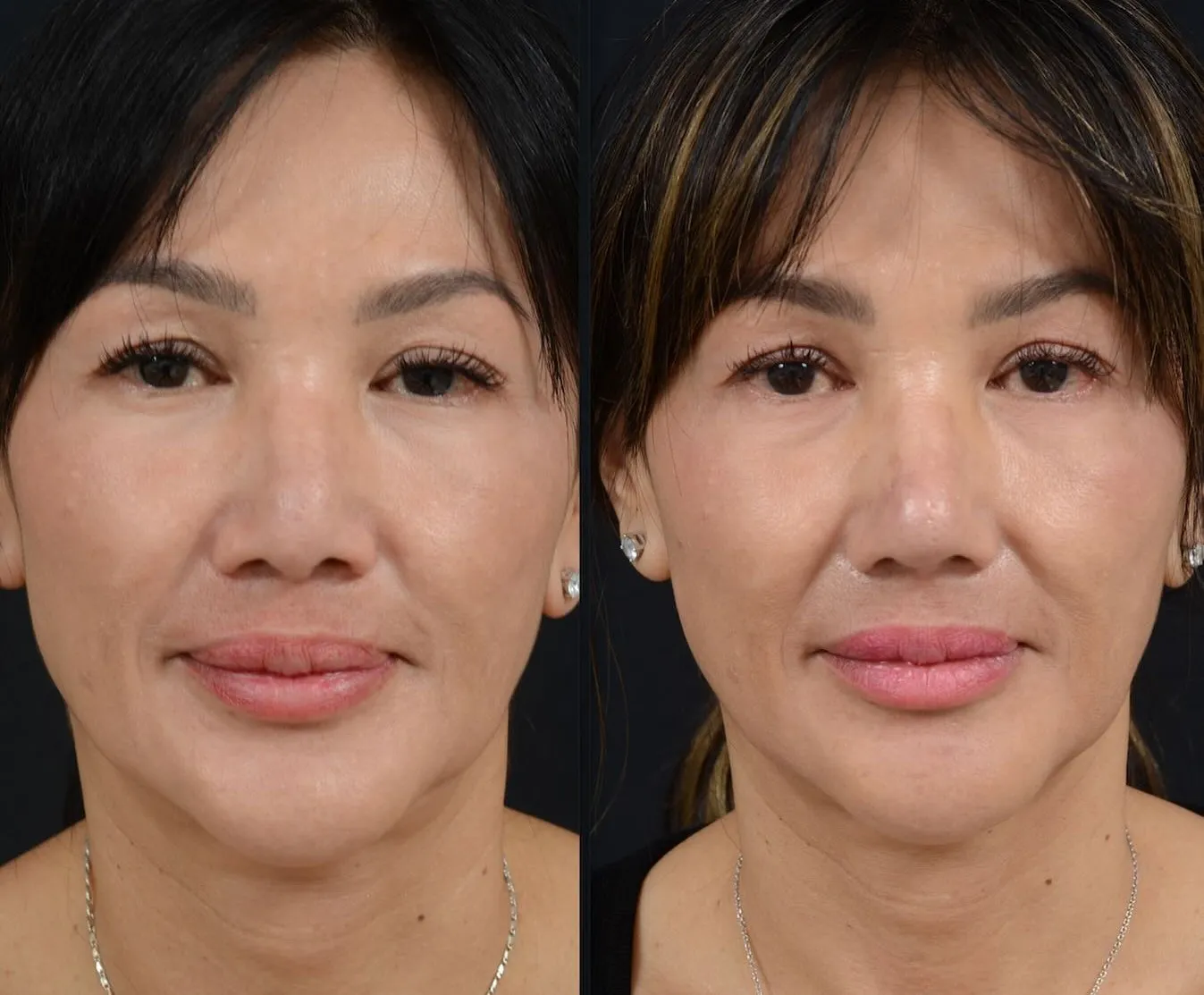
Front View
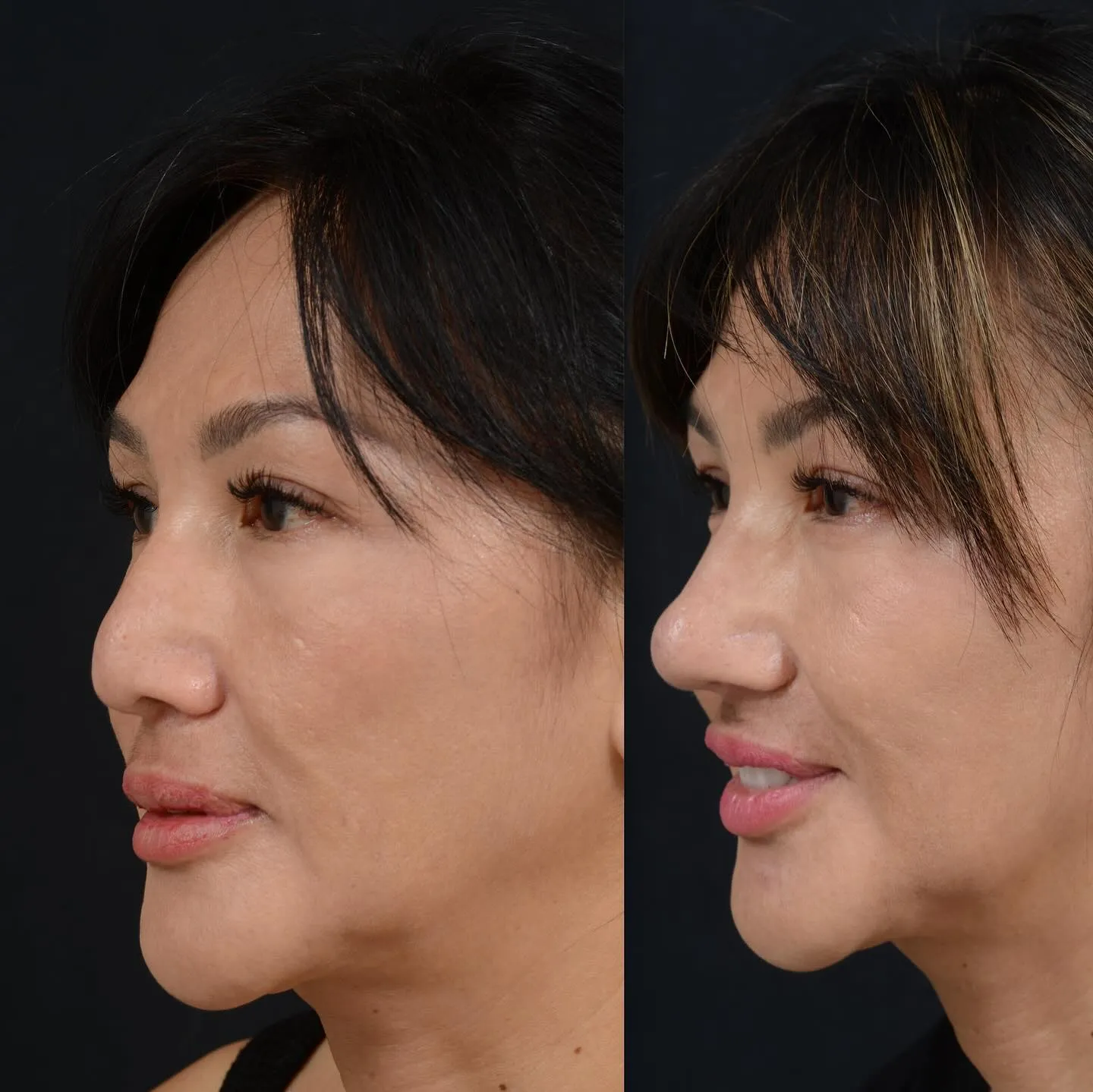
Side View
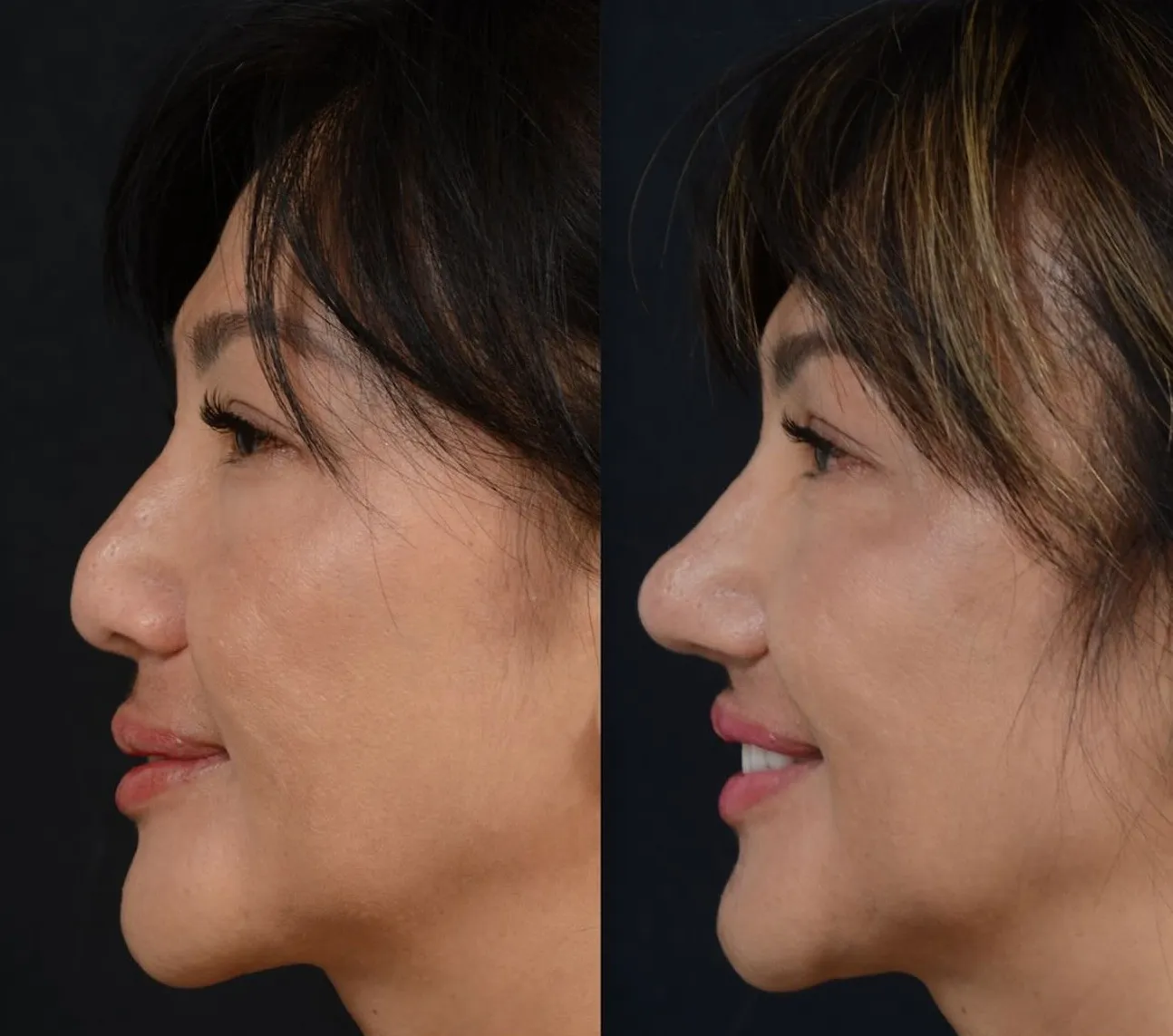
Profile View
Rhinoplasty & Nasal Reconstruction
My Approach
Complex revision rhinoplasty is among the most challenging procedures in facial plastic surgery. This patient presented after numerous failed attempts at reconstruction following liquid silicone injections placed throughout the nose, face, and chin at a young age. These injections triggered chronic inflammation, infection, granulomatous changes, and progressive tissue damage. Over time, the nasal soft tissues became tight, scarred, poorly vascularized, and severely contracted — far from normal anatomy. In cases like this, the goal is not simple refinement — it is true reconstruction. Every trace of abnormal or inspissated silicone must be carefully removed while preserving what little healthy tissue remains. The nose must then be rebuilt from the ground up. Using rib (costal) cartilage, I reconstructed the entire structural framework to restore projection, support, and contour. Strong, stable grafts are essential when native cartilage has been destroyed or weakened. Patience, meticulous technique, and respect for compromised blood supply are critical. Aggressive maneuvers in this setting can risk skin loss or necrosis. The focus is always safety first, followed by gradual, natural restoration of form. At five months, her nose already shows improved shape and stability. Continued refinement will occur as swelling resolves over the next year. Just as important, this case highlights an essential message: permanent injectable materials such as silicone have no place in facial aesthetics and can cause lifelong damage.

Dr. John Shamoun
MD FACS
The Healing Process
Recovery after complex revision and reconstructive rhinoplasty is slower than primary surgery due to scarring and tissue compromise. During the first 2–3 weeks, swelling and stiffness are expected. Bruising is usually mild to moderate. Because the tissues have been operated on multiple times, inflammation may last longer than typical rhinoplasty cases. Most patients return to light daily activities within 1–2 weeks, but visible swelling — particularly at the tip — can persist for several months. Approximately 60–70% of swelling improves within the first few months, with final definition gradually appearing over 12–18 months. Reconstructed noses often look slightly firm or over-supported early on. As tissues soften and settle, the shape becomes more natural and refined. Long-term follow-up is essential to ensure proper healing and stability.By week three, most patients feel comfortable resuming normal activities. Facelift results settle within a few months, while the nose continues to refine for up to a year.
FAQs
Revision rhinoplasty corrects problems from previous nasal surgeries. Reconstructive cases go a step further, rebuilding missing or damaged structure when normal anatomy has been compromised by prior operations, trauma, or injectable materials.
Rib cartilage provides strong, abundant, and reliable structural support when septal or ear cartilage is unavailable or insufficient. It allows the surgeon to rebuild the nose safely and durably in complex cases.
Swelling lasts longer than primary surgery. Noticeable improvement occurs over several months, but final definition may take 12–18 months, especially in the tip area.
Discomfort is typically manageable, but recovery may feel tighter or slower due to scarring and grafting. Most patients still return to normal daily activities within a couple of weeks.
Permanent fillers such as silicone are dangerous and strongly discouraged. They can cause chronic inflammation, infection, deformity, skin necrosis, granulomas, and even systemic complications. Structural surgical correction is far safer and more predictable.
Patients with prior unsuccessful rhinoplasties, structural collapse, breathing problems, or damage from fillers or trauma may benefit. Good candidates are healthy, patient, and understand that improvement is gradual rather than immediate.